Scaling Through Automation: Advancing a Complex Medical Device Program with Integrated Engineering and Manufacturing
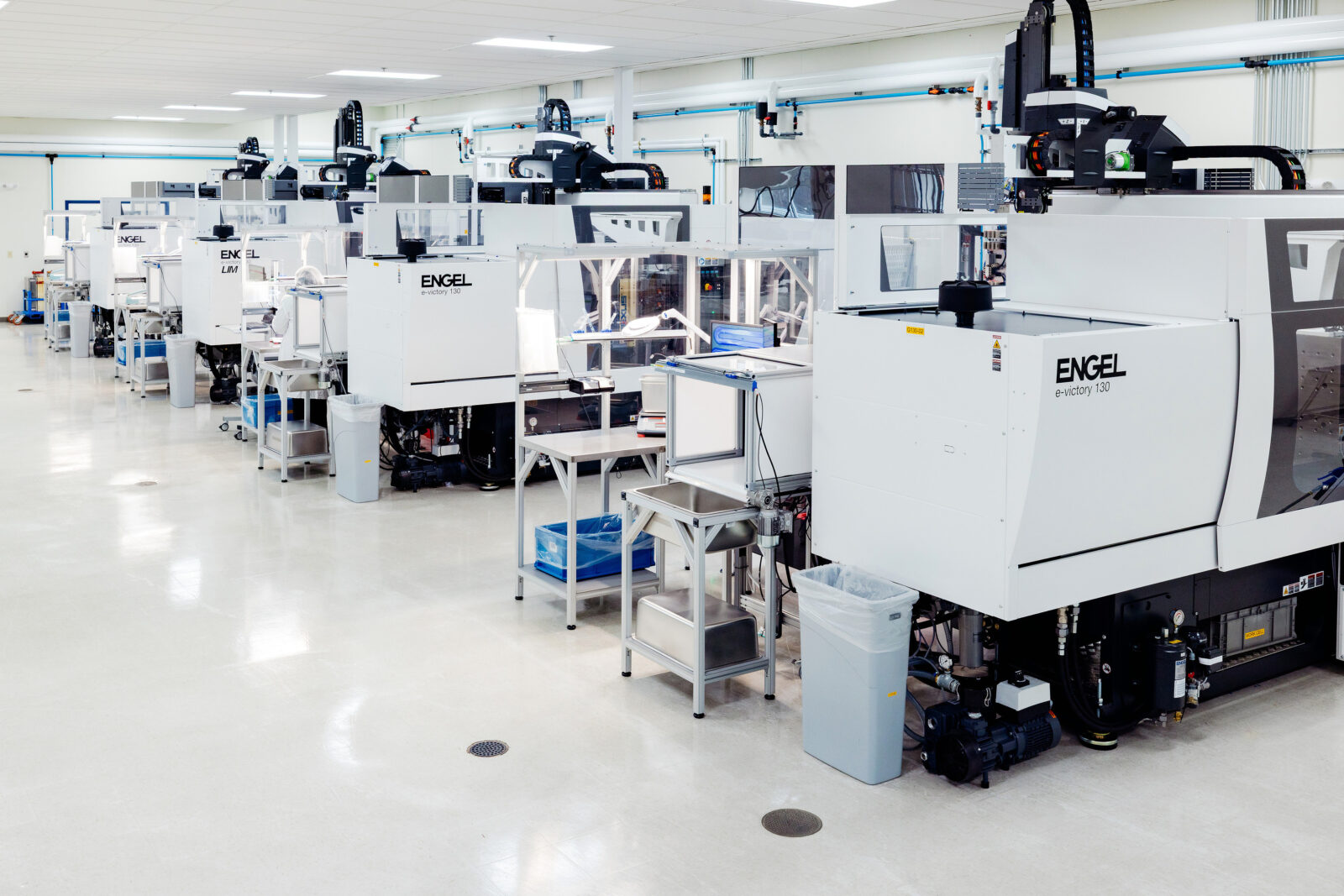 Medical device programs often begin with a clear vision—but translating that vision into a scalable, repeatable manufacturing process can often present challenges. A recent program with one of our customers highlights how early collaboration, Design for Manufacturability (DFM), and advanced automation can transform a complex component into a world-class production solution.
From Concept to Scalable Reality
Our customer approached us with a well-defined vision for their device and a clear expectation: the program needed to run in a highly automated, scalable manufacturing environment.
The program, which was already running with a different supplier, relied on outdated tooling and a manufacturing environment that was not conducive to automation. This resulted in persistent quality and processing issues, along with limited ability to scale production. These issues prompted the customer to reach out to MRPC.
Early Engagement and A Design For Manufacturability Driven Strategy
MRPC approached the opportunity with a structured, engineering-first mindset. During the initial assessment, cross-functional teams worked closely with the customer to evaluate the full scope of the program—from product design and material considerations to process development and manufacturing infrastructure.
This collaboration enabled MRPC to apply Design for Manufacturability (DFM) principles to identify risks and opportunities upfront. The focus extended beyond the component itself to include:
- Process scalability and automation readiness
- Tooling strategy and validation requirements
- Material handling and consistency
- Facility layout and workflow optimization
Taking a holistic view of the program positioned MRPC as a manufacturing partner capable of delivering a turnkey solution.
Advanced Automation and Integrated Work Cells
MRPC partnered with a technically advanced tooling and automation provider to develop a fully integrated manufacturing solution. Together, the teams collaborated closely—both remotely and on-site, including in-depth technical reviews—to design and build automated work cells tailored to the customer’s device.
The final solution incorporated several advanced manufacturing technologies, including:
- High-cavitation, valve-gated cold deck tooling designed for precision and repeatability
- Fully automated robotic systems for part handling, pick-and-place, and in-line inspection
- Integrated machine-to-machine communication to monitor performance and detect anomalies in real time
- A continuous, closed-loop manufacturing approach designed to minimize variation and eliminate waste
The molds developed for the program were multi-cavity, valve-gated, cold deck production molds built for high-volume manufacturing. The valve-gated system allows silicone material delivery to each cavity to be precisely controlled throughout the molding process, helping maintain consistent dosing and reducing part-to-part variation. Additionally, the cold deck mold design minimizes material waste by eliminating excess runner scrap during production.
The tooling also incorporated flashless mold technology, a precision toolmaking approach that minimizes excess silicone material at mold parting lines. Achieving this level of precision requires extremely robust tool construction, advanced machining techniques, and tightly controlled clearances measured in microns. The molds were designed to support long-term, high-volume production with expected lifecycles exceeding one million cycles.
Unlike traditional setups where equipment operates independently, the work cells at MRPC are fully integrated, cross-communicating systems. From the silicone dosing equipment supplying material to the molding machine, to the automation handling finished parts, each system continuously communicates with the others to monitor critical parameters throughout the process.
This level of automation significantly reduced risk while improving overall efficiency and consistency. If a process variable falls outside validated parameters, the system can automatically alert operators, suspend production, or segregate suspect parts. Integrated cartesian robotics equipped with custom end-of-arm tooling safely extract molded components, inspect for molding irregularities, and verify mold conditions before continuing production.
Enabling Consistency Through Process Control
A key challenge in the program involved the material itself, a high-performance compound with strict handling requirements, including refrigeration and a limited usable life.
Traditional material feed methods introduced variability and potential processing issues. To address this, MRPC implemented a continuous feed system using roto-feed technology, ensuring the material remained homogeneous throughout the molding process.
This approach delivered several advantages:
- Improved material consistency and part quality
- Reduced risk of processing defects
- Continuous operation to support high-volume production
- Enhanced process stability for a perishable material
Combined with advanced molding techniques, including injection HCR (high consistency rubber)—a capability not widely utilized across the industry—this solution pushed the boundaries of what is typically achievable in medical device manufacturing.
Designing for Scale
MRPC placed a strong emphasis on operational execution for this program. The cleanroom manufacturing environment was carefully designed to support single-piece flow, with clearly defined workstations, material flow paths, and cleaning procedures at each stage.
Because the components manufactured in this program make blood contact in their end-use application, maintaining a highly controlled cleanroom manufacturing environment was critical. The automated work cells were specifically designed to support stringent cleanliness requirements, with safeguards incorporated to help minimize the risk of both physical and airborne contamination throughout production.
From raw material handling to finished goods, every aspect of the process was optimized to support scalability, repeatability, and compliance within a controlled manufacturing environment.
A World-Class Manufacturing Solution
Throughout the program, the customer remained closely engaged—regularly visiting and validating progress to ensure alignment at every stage. This transparency reinforced trust and enabled continuous collaboration.
At the conclusion of the final review, the customer described MRPC’s operation as a “world-class manufacturing environment”—highlighting the level of precision, automation, and integration achieved.
Ultimately, MRPC delivered:
- A fully automated, scalable manufacturing solution
- Improved product quality and process reliability
- A robust, future-ready production platform
- Confidence in long-term supply continuity
Scaling to Meet Customer Needs
This program underscores MRPC’s ability to combine Design For Manufacturability (DFM) expertise, advanced medical molding technologies, and automation-driven manufacturing to solve complex challenges. By engaging early, thinking holistically, and investing in integrated solutions, MRPC helps customers move from concept to commercialization with confidence.
As medical device programs continue to demand higher performance, tighter tolerances, and greater scalability, MRPC remains focused on delivering innovative manufacturing solutions that evolve alongside customer needs.